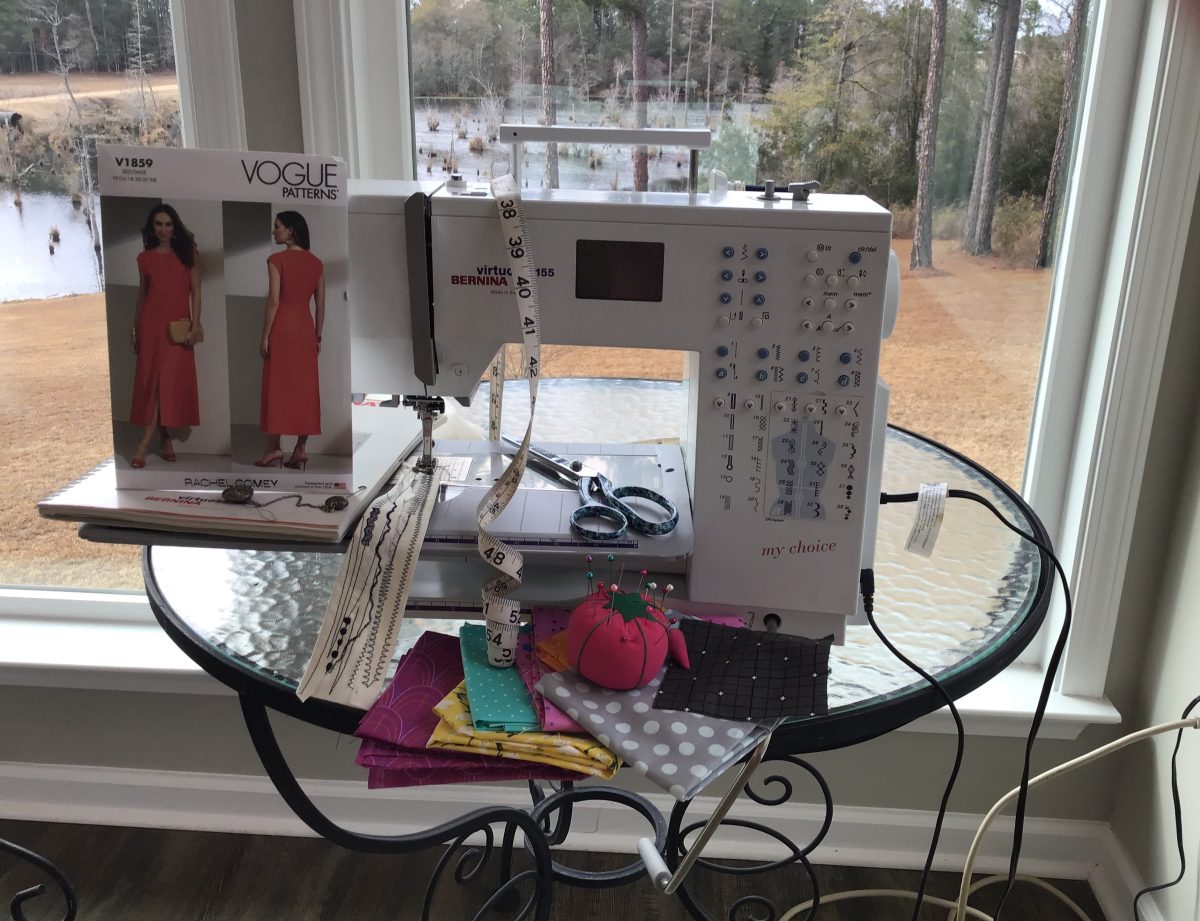

Before I start laying out pattern pieces and put scissors to cloth I do a bit of Pattern Analysis.
This process involves several steps, beginning with Why Do I Like This?
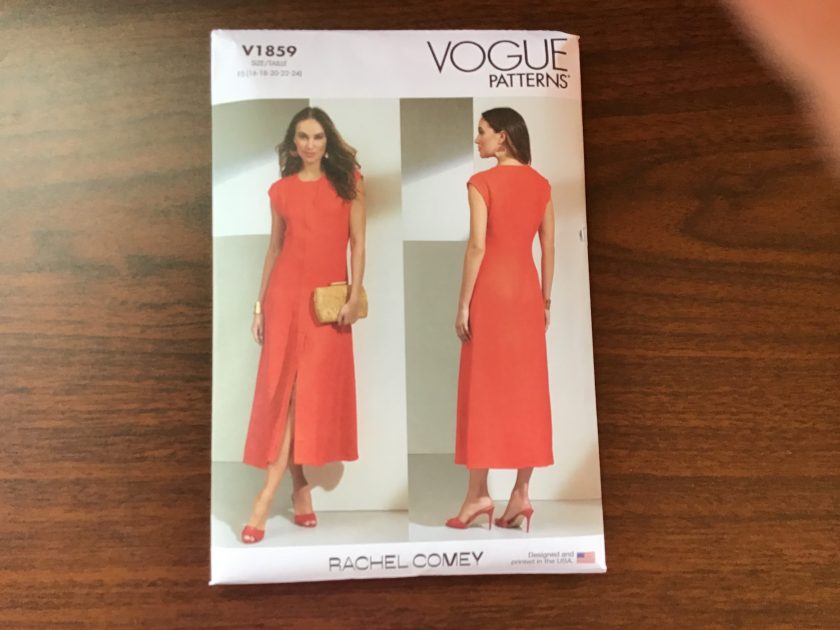
This is classy. Classic look, feminine, elegant, and looks wonderful in a solid color. The lines of this would flatter many women, making looking them look long and lean. And it is RED.
This would be a fabulous Little Black Dress!
Here are the line drawings
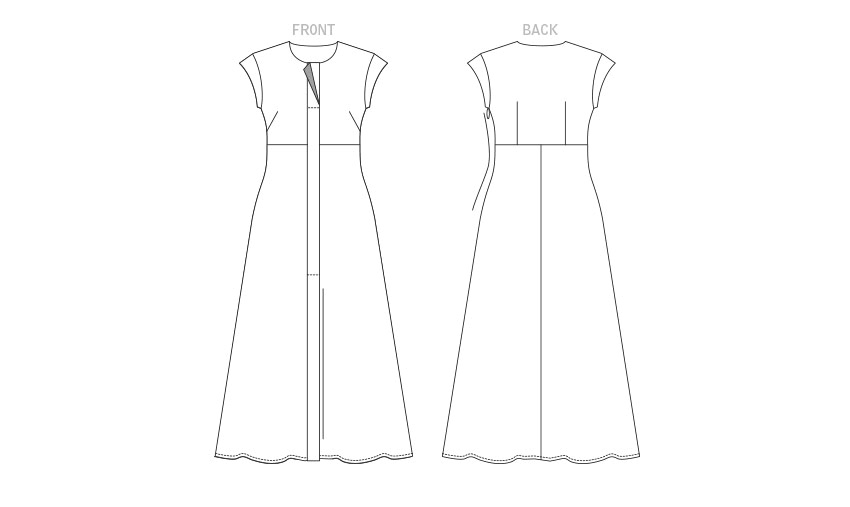
The line drawings reveal some interesting details. Empire waist, front bands, arm bands, left side seam zipper, and a contrasting fabric on the front neck band. Slit opening in front.
Finished Garment Measurements are not very helpful. The only ones given are the width of the lower edge and the back length from the base of the neck.
The pattern description includes Hong Kong finished seams and a stitched hem. And cup sizes for A, B, C, and D! Recommended fabrics are medium weight cotton, linen, and pique. Contrast fabrics are broadcloth and challis. Fusible interfacing is recommended. Sizes range from 8 to 24. The largest size requires 3 1/4 yards of 45 inch or 2 5/8 yards of 60 inch fabric.
Notions are a 14 inch invisible zipper and three packages of 1/4 inch double fold bias tape.
This pattern requires 1 5/8 yards of contrast fabric. Lining required is 1/2 yard. It also requires 1 5/8 yards of interfacing.
HUH?
There is a lot of mystery here. Why so much bias tape? Why so much contrast fabric? Why so much interfacing? And why so little lining?
After purchasing the pattern (thank you somethingdelightful.com for the pattern sales!) and a study of the cutting layouts and instruction sheets, these questions were answered.
The lining is only used for the armbands. Not for the bodice. That explains the lining question.
The contrast fabric is used for the right front band only, which is three separate pattern pieces.
The interfacing is used for the front and back neck facings, front and back arm bands, and the front bands. The front band pieces are cut on the lengthwise grain so that explains the yardage requirements for interfacing. According to the cutting diagram all of the interfacing will be used up.
The contrast fabric is also cut on the lengthwise grain on a single thickness. A lot of fabric gets wasted here! I will probably cut these pieces on the crosswise grain to save on fabric (depending on the fabric used, of course).
The pattern description of Hong Kong finished seams is the reason for the three packages of bias tape. The pattern instructions and illustrations do NOT demonstrate the Hong Kong finish application: it is referred to as BIND in the basic glossary on the pattern sheet.
Next up: The pattern sheet!
 Sewing In Circles